
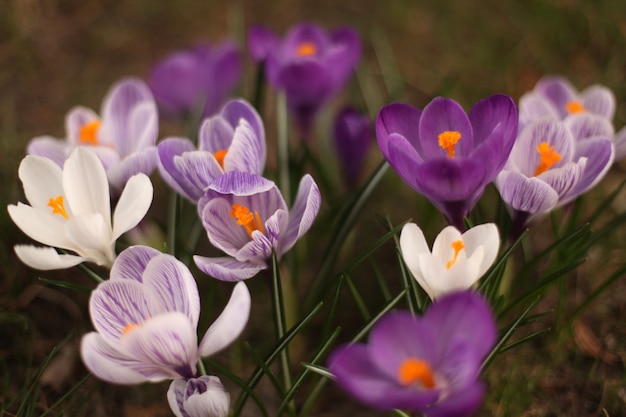
Pick your own saffron on a cool autumn morning
A hands-on afternoon at the end of summer to plant saffron crocus properly — and everything you need to carry it through to a jar of red threads you grew yourself.
The promise
A small, precious crop that comes back year after year
There's something lovely about walking out in late October and finding violet flowers where there was only soil. A few weeks later, a little glass jar of dried threads sits on your shelf, ready to colour a pot of rice gold.
- 15 flowering-size corms, planted correctly from day one
- Confidence to pick, dry and store the threads yourself
- A patch that multiplies, giving a little more each autumn
- A slow seasonal ritual to look forward to
The problem
Saffron feels out of reach — mostly because nobody explains it
Many people assume saffron needs a field in Spain. Others have tried a few corms from a catalogue and seen leaves but no flowers. Both experiences are common, and both are usually down to timing and soil rather than any lack of skill.
The wrong moment
Corms planted in spring, or too late in autumn, rarely flower that year.
Soggy soil
Japan's wet months can rot corms sitting in heavy, water-holding mixes.
The harvest rush
Flowers last only a few days; without a plan, threads get missed or dried too hot.
The solution
Right time, right soil, right spot
Sessions run only from late August to September, when corms are ready to go in. Together we choose a sunny, well-drained spot or deep containers, then mix a gritty soil that lets water pass straight through.
You'll also see the indoor tray method practised by growers in Taketa, Oita: corms flower on shelves indoors, protected from autumn rain, before being moved outside to grow their leaves. It's a gentle option if your garden is damp or your winters are cold.
The point isn't to make saffron complicated. It's to get the few decisions that matter right, so the rest can be left to the plant.
The experience
Two and a half hours with soil on your hands
This is a practical session. You'll do the planting yourself, with us beside you explaining each step.
- Choosing the place
We walk your garden or balcony and settle on the sunniest, best-drained option.
- Mixing the soil
A gritty blend you'll be able to make again, explained ingredient by ingredient.
- Planting the corms
Depth, spacing and which way up — your 15 corms go in with care.
- The tray method
A demonstration of indoor flowering, so you can choose what suits you.
Then, when flowering season comes round, we check in online to help you pick and dry your first threads. You won't be guessing on your own.
The investment
A patch that's yours for years
The corms are included, and they multiply. Lifted and divided every few years, the planting you make this season can keep widening for a long time.
Because the session is timed to the season, places are arranged for late August and September. If you're reading this after the window has closed, you're very welcome to ask about next year.
Saffron Corm Planting & First Harvest Session
¥12,500
- 2.5-hour hands-on planting session
- 15 flowering-size saffron crocus corms
- Demonstration of the Taketa indoor tray method
- Picking guide for the autumn flowering weeks
- Gentle low-heat drying steps and storage notes
- Online check-in during flowering season
The proof
What a first season honestly looks like
Saffron is generous in pleasure but modest in quantity — roughly 150 flowers give about one gram of dried threads. Here's a realistic picture of the first year.
Late Aug – Sep
Corms planted. Nothing visible for a while, which is perfectly normal.
Late Oct – Nov
Buds push through and open for a few days each. You pick in the morning.
Winter
Grass-like leaves grow and feed the corms, which form new cormlets below.
A few more flowers, as the patch begins to widen.
From 15 corms, the first harvest is a small pinch — enough for a few special dishes. You'll track progress simply by counting flowers each morning on the picking guide, and we'll go over the numbers together at the online check-in.
Our commitment to you
We stay with you until the first flowers
If none of your corms flower in the first autumn, we'll look at what happened together during the check-in. Where the corms themselves turn out to be at fault, we'll replace them for the following season.
Not sure saffron is right for you? Write to us first. A no-obligation chat about your garden costs nothing, and we'll tell you honestly if another crop would suit you better.
Next steps
How to get started
- 1
Send a note mentioning saffron and roughly where you live in Japan.
- 2
We reply within two working days and pencil you in for the next planting window.
- 3
Closer to the season, we confirm a date and send a short list of what to have ready.
Would you like a saffron patch of your own?
Drop us a line whenever it suits you. We'll keep you posted about the next planting window and answer any questions in the meantime.
Ask about saffron